Pioneering Security with Exclusive Fraud Prevention Technology on the HPE NonStop Platform1/16/2024
 In the dynamic landscape of digital transactions, the imperative to secure financial data has reached unprecedented heights. Lusis Payments, a frontrunner in payment software solutions, stands out as a pioneer in fraud prevention, particularly on the HPE NonStop platform. This article explores the intricate details of fraud prevention on HPE NonStop, highlighting the innovative features offered exclusively by Lusis Payments and shedding light on the unique benefits of operating on the HPE NonStop infrastructure. Fraud Prevention on the HPE NonStop Platform: The HPE NonStop platform, renowned for its reliability, scalability, and fault-tolerance, has become the platform of choice for mission-critical applications in the financial sector. Lusis Payments has strategically harnessed the strengths of this platform to develop fraud prevention solutions that seamlessly integrate with its unique architecture.
Benefits of Being on the HPE NonStop Platform:
Exclusivity with Lusis Payments: Lusis Payments proudly stands as the exclusive provider of payments fraud prevention technology on the HPE NonStop platform. With a singular focus on delivering top-notch security solutions tailored for this unique environment, Lusis Payments has solidified its position as the go-to partner for financial institutions seeking unparalleled protection against fraud. Collaboration with Lusis AI: In a testament to its commitment to innovation, Lusis Payments collaborates closely with Lusis AI, its dedicated artificial intelligence division. This collaboration is instrumental in enhancing the efficacy of fraud prevention solutions. Lusis AI's expertise in developing intelligent algorithms and predictive models contributes significantly to strengthening Lusis Payments' ability to stay ahead of evolving fraud landscapes. Additionally, it's worth noting that Lusis Payments employs the BackTest Engine (BTE), also known as the sandbox for testing. This tool ensures rigorous testing of rules before they are moved into a repository for production, effectively utilizing a fully integrated approach with TANGO for acquiring and issuing. Conclusion: As financial transactions continue to evolve, Lusis Payments and the HPE NonStop platform stand as steadfast guardians, ensuring that the future of digital payments remains secure and resilient. The combined forces of Lusis Payments' cutting-edge fraud prevention software, tailored exclusively for the HPE NonStop environment, and the inherent benefits of operating on this platform create a formidable defense against the ever-present threat of fraud. The seamless integration, fault-tolerant architecture, and scalability of both entities contribute to a secure and efficient environment for financial institutions and businesses. In this collaborative pursuit of security and innovation, Lusis Payments, as the exclusive provider of fraud prevention technology on HPE NonStop, redefines the landscape of digital transactions, setting new standards for the intersection of technology, security, and financial integrity.  When considering the world of data management and databases, one may not immediately associate it with excitement. However, the realm of HPE NonStop SQL/MX offers a unique perspective that can pique the interest of buyers and technology enthusiasts alike. This article delves into the importance of NonStop SQL/MX and its relevance in today's rapidly evolving computing landscape. The Symbiotic Relationship Between Software and Hardware In the realm of computing, the relationship between software and hardware has always been of great significance. This synergy can profoundly impact the performance, reliability, and scalability of applications. NonStop SQL/MX embodies this synergy by providing a database solution optimized to work seamlessly with HPE's NonStop hardware platform. Just as a finely crafted beer requires the right container to preserve its quality, data deserves a database technology that ensures its integrity, availability, and performance. A Journey Through Computing History To appreciate the evolution of NonStop SQL/MX, it's worth taking a brief journey through computing history. From the early days of personal computers, where enthusiasts used Apple IIe computers for various tasks, to more complex endeavors involving minicomputers like the HP 3000, our experiences reflect the ever-changing landscape of computing. Fast forward to the early 80;s ', where we encountered the NonStop platform and Enscribe for the first time. At that time, “Tandem” or "NonStop" primarily referred to the hardware platform. Today, it has evolved into a software solution that adapts to the cloud-centric computing world. The Cloud-Centric World and Abstracted Applications In today's cloud-centric environment, applications are abstracted from the underlying hardware and operating systems. Tools like Docker and Kubernetes enable elastic scaling, making it easy to provision computing resources on-demand. The complexities of the infrastructure are hidden behind user-friendly interfaces, and users focus on the benefits of the applications. If we need more computing resource, then we just load up the Azure portal and configure a virtual machine with the exact specifications that we need. Just by clicking check boxes.
The Future of NonStop: A Checkbox on the Horizon? In this modern landscape, one might wonder if we will ever see a "NonStop" checkbox option in cloud platforms. While we don’t have a crystal ball, the potential benefits of NonStop fundamentals being more accessible are clear. Businesses can leverage this technology for applications requiring high availability, scalability, and fault tolerance. The True Challenge: Data Management However, the selection of technical infrastructure is only part of the equation. The true challenge lies in data management. The advent of Data Sovereignty, GDPR, and Cyber Terrorism are just some of the latest challenges impacting data management policies and governance. Speaking frankly, the mountain of regulation surrounding data management is extremely intimidating. With hindsight, the checkbox that users may really like to see on an Azure portal is “Access to helpful data management expert?”. HPE GreenLake: A Differential Benefit It becomes evident that HPE GreenLake offers a differential benefit compared to commodity cloud service providers. While giants like Amazon, Microsoft, and Google provide powerful cloud solutions, HPE's partnership with industry vertical leaders, such as Lusis Payments for Retail Payments, sets it apart. This partnership extends HPE's multi-decade excellence as the custodian of the NonStop spirit into the realm of cloud computing. Click. In Closing The journey through computing history underscores the importance of databases like NonStop SQL/MX in modern computing. While the checkbox for NonStop on a cloud portal may be close, it is not here today, the value of data management expertise and strategic partnerships cannot be overstated. HPE's legacy in the world of NonStop computing and its innovative GreenLake offering hold the promise of exciting years ahead in the ever-evolving world of technology.  2021 has been another tough year for Covid-19 related challenges. Our thoughts continue for those who have been impacted by the virus especially those who are sick, we extend our heartfelt wishes for a full recovery.
We would also like to take this opportunity to thank all of our clients, partners and teammates for another extraordinary year. The dramatic surge in demand for electronic payments continues from 2020 and the Lusis Payments delivery team has been hard at work helping customers grow their systems and businesses. Lusis completed a record number of projects in 2021 including:
This summer, HPE selected TANGO as their preferred GreenLake financial payments solution. You can watch the HPE Discover interview with Lusis Payments CEO, Philippe Preval and Keith White, GM of HPE GreenLake cloud solutions here. “HPE is delighted to partner with Lusis Payments and TANGO as the premier Retail Payments solution for future generations.”- Keith White. Also this year, Lusis and HPE successfully demonstrated TANGO running at 4500 TPS on a HPE NS server the ATC – proving that TANGO is still the most performant and cost effective payments solution for HPE NonStop. To read more details about the test read the blog here. Our product investments have continued in earnest, ensuring that TANGO remains at the forefront of FinTech payments. Some highlights include:
We are looking forward to the exciting adventures we will share in 2022 and would like to wish all of our customers, partners and staff a Happy and Prosperous New Year!! 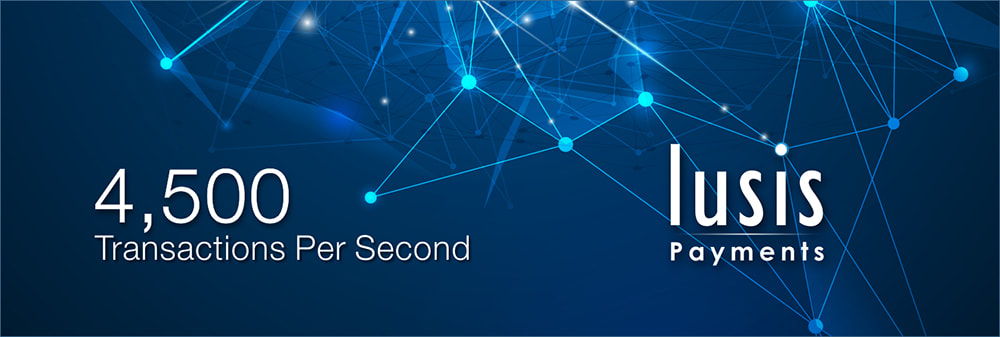 In 2012, Lusis Payments conducted a historic proof of concept with partner HPE at the HP ATC (advanced technical center) in Palo Alto, CA. TANGO was tested for 48 hours straight at full capacity. The system processed 2,500 TPS without fail. The hardware configuration used at the time of the benchmark was chosen to match a client’s production system and consisted of a 8-processor HPE J-series NonStop. TANGO proved responsive and surpassed normal daily tasks and nightly settlements. This proof of concept proved that TANGO was fault tolerant and achieved maximum volumes and throughput of a total daily volume of 50 million transactions per day.
The outstanding results came from long hard-working sessions with the HPE teams which we were proud to work with. The first week included our CTO working on-site. Soon after, he was joined by our senior project leaders, and they received significant additional support from our lab in Paris. In addition to the dedicated HPE team, the client’s team also partnered with us to test the conformity of the benchmark protocol. HPE worked with the client to reproduce its environment for a true simulation. It was great project, and we were proud of the outcome. Since then, HPE has continued to suggest that we test TANGO on the newest (Intel based chip) hardware. As we were still quite pleased with the 2500TPS results and the fact that the client continued to realize improved performance on their HPE NonStop platform, we chose not to do additional test campaigns in subsequent years. Until now. At the end of Q1 we said “ok, let’s do it”! At that time, bandwidth was quite low, so we made it “our dry way of doing it.” We used our Vanilla switch based on the TANGO version 7 platform installed on HPE NS server: 8 processor, 6 core NS7-X3 system again at the HP ATC labs. This system runs OS release L21.06.17.2 with NonStop SQL/MX 3.7.2. Each NonStop processor contained 256 GB of memory. We used a very similar testing protocol without any specific tunning. And “Torpedo… LOS”! On our first run we achieved 3,500 TPS. Then with less than 10 hours of tuning, we easily reached 4,500 TPS sustained for two straight hours. So, this has become our new reference on HPE NonStop: 4,500 transactions per second on an 8-CPU machine. And this was simply done with our Vanilla switch and some very light tuning. So, nothing heroic, just the standard product using a standard configuration. In Q3, we will test TANGO with the new Posix Kernel of HPE NonStop and see where we take it! Stay tuned. Philippe Préval Lusis CEO Chez Lusis  As the end of the year draws near we would like to take the opportunity to thank all of our clients, partners and teammates for an extraordinary year, amidst the challenges of the global coronavirus pandemic which has affected families, businesses and communities. Our thoughts go out to anyone who has been impacted by the virus especially those who are sick, we extend our heartfelt wishes for a full recovery. We have always said “we hold our clients central to our thinking and our actions” and that statement holds true this year more than ever. The success of Lusis Payments is based on the relationships we have built over the years, and we really wouldn’t be where we are without you. Over this past year, as more and more North American financial institutions have called upon Lusis Payments for our technology and services we added our first North American support center in Toronto Canada and have made NA our primary market. Until this year, Lusis had only sales and consulting teams in North America. The addition of this facility and the team assembled will dramatically accelerate new and current project deployments of TANGO. The need for a cutting-edge, real-time fraud solution has never been so critical as it is now. The world has seen an unprecedented switch from CP (cardholder present), CNP (cardholder not present) to online transactions, which has massively changed the patterns of fraudulent activity for OLTP (online transaction processing). Our clients that process online payments needed the agility to rapidly counteract this industry swing. This year Lusis introduced TANGO AI Fraud (Tango AIF™) to provide a leading-edge solution for fraud monitoring, detection and action — technology that provides the latest methods for processing secure transactions, irrespective of source, nature or market segment. The development has followed years of dedication by our Artificial Intelligence department, created in 2017. As part of our continued dedication to AI, earlier this year Lusis created a research chair in partnership with CentraleSupélec a prestigious French graduate engineering school of Paris-Saclay University. Through this partnership, Lusis and CentraleSupélec are strengthening their collaboration in the field of artificial intelligence applied to the banking sector. This summer Lusis also announced further expansion as we increased our presence in Mexico and select countries of Latin America. We were excited to introduce Mercedes Fabila as the newest addition to our sales executive team. Fabila joined the company as the Director of Sales, Mexico and Latin America. Our most exciting news for the year was the new release of TANGO Version 8. TANGO V8 is a major upgrade that provides full microservice integration and complete Cloud capacities. The new features bring expanded capacities and even greater flexibility for delivery. Please contact us directly for a one-on-one presentation of TANGO’s full capabilities and new capacities. Recently, we were able to interact with several clients, partners and friends during the Virtual NonStop Technical Bootcamp. Through zooms or instant messages, we were happy to answer questions and be able to say hello to colleagues in the industry. Our presentation “Today’s Payments Market: Creating Opportunities from Challenges” is still available for viewing through the Whova app. As the new year approaches, we know there will be many new challenges ahead. We welcome all that 2021 has in store for us with enthusiasm and anticipation for all the opportunities around the world. From the whole team at Lusis Payments we wish you all Happy Holidays!  |
lUSIS nEWSThe latest company and industry news from Lusis Payments. Archives
June 2024
Categories
All
|

 RSS Feed